lunes, 17 de octubre de 2016

CLIMATE WARMING
Weather is changes we see and see outside from day to day.It might rain one day and be sunny the next day.Sometimes is hot.Weather also chang place to place.

People in one place might be wearing shorts and playing outside,at the same time people are away might be shoveling snow. 


Earth rigid crust is made up of enormus pieces called tectonic plates.These plates vary in size and shape.They also in the amount they move over the more flexible layer of the muntle below them.Heat from deep within the planet causes plates move.This movement happens so slowly that humans dont feel it.But some of earth plates move as much as a few inches each year.


This might not seem like much ,but over millions of years ,it causes the plates to move thousand of miles.


Movement of surface plates changes earth surface features very slowly.It take millions of years for pleates to move enouhg to create lond forms.Some land features form when pleates are crashed together.At time forces within earth push the edge of one plate up over the edge of a plate beside it,this dramatic movement can create mountains,volcanoes and deep treaches in the ocean floor.


At another times,plates are crushed together in a way that causes the edges of both plates to crumble and break.This event can form jugged mountain ranges.If plates of the ocean floor move apart,the spaca between them widens into a giant crack in earth crust.


The cylindrical Projections


Cylindrical Projection

A map is a representation of a place or a location. There are different types of maps and also have different uses.  Maps are called projections because they have to project  a  3-D surface  on to a  2D map.


The 3 kind  of projections are: cylindrical, conic and  planar. 
 

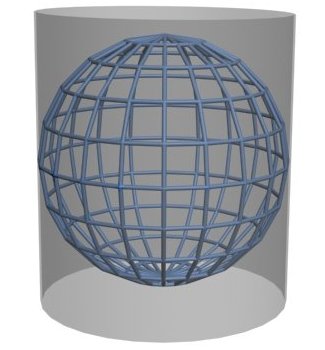
The cylindrical  projection is  a  type  of  map in which  the geometric  figure  (cylinder)  is wrapped around  the  earth, and the details are projected  into a  a cylindrical surface.


https://upload.wikimedia.org/wikipedia/commons/5/52/Projection_cylindrique.jpg


 The cylinder is unwrapped  into a  flat surface.  And  has a  lot  of  distortion in the  polar regions. 


One type of  cylindrical projection  is  the Mercator  Projection.  Was created by Gerard  Mercator by 1569  and was used during the  Century XVIII   on the nautical  navigation.  


 This  kind  of  projection is  a type of a rectangular  map   in which the  lines  of  altitude and  latitude intersect at right angles .  Polar  areas also been distorted. 


The Robinson projection is  a  pseudocylindrical projection,  that was  first  made  in 1963 by Arthur  H Robinson. 


The  Robinson projection is also called  the Orthophanic  projection.  In this map  the lines of latitude  are parallel  to the equator, but  lines of  longitude are  elliptical arcs. The  compass  lines are curved and that’s why are distorted. 

Resultado de imagen para robinson projection

In  a cylindrical projection  the  parallels and meridians  appearing  as  a straight lines  perpendicular to each other  if the cylinder is tangent over the sphere at the equator and all parallels as  well as the  points of the  poles if shown appearing as the same  length as the  equator (1)
 

 CONCLUSIONS 
 
I understand  with this information  that  there  are some types  of  maps that  are  used to represent  the  earth  and   specially the cylindrical projection  was  used  in the navigation because  has  continue straight lines.
 
 
 But  due the  map is  unfolded and  represented in a  rectangle  the  polar  areas are  distorted.  And  in the  century XVIII Mercator was  used these cylindrical projections. 


I hope  you enjoy this information. 
 
References

 (1)Definition of CYLINDRICAL PROJECTION

In-text: ("Definition Of CYLINDRICAL PROJECTION")
Your Bibliography: "Definition Of CYLINDRICAL PROJECTION". Merriam-webster.com. N.p., 2016. Web. 18 Oct. 2016.

(2)Proyección cartográfica

In-text: ("Proyección Cartográfica")
Your Bibliography: "Proyección Cartográfica". Es.wikipedia.org. N.p., 2016. Web. 18 Oct. 2016.

(3)Cylindrical equal-area projection

In-text: ("Cylindrical Equal-Area Projection")
Your Bibliography: "Cylindrical Equal-Area Projection". En.wikipedia.org. N.p., 2016. Web. 18 Oct. 2016.
 

Blog created by: Paola  Hellmund  Gómez.
18/10/2016 
 7. B.